I recently had the chance to visit a fast-charging hub in Paris - and it confirmed something I have been thinking for a while:
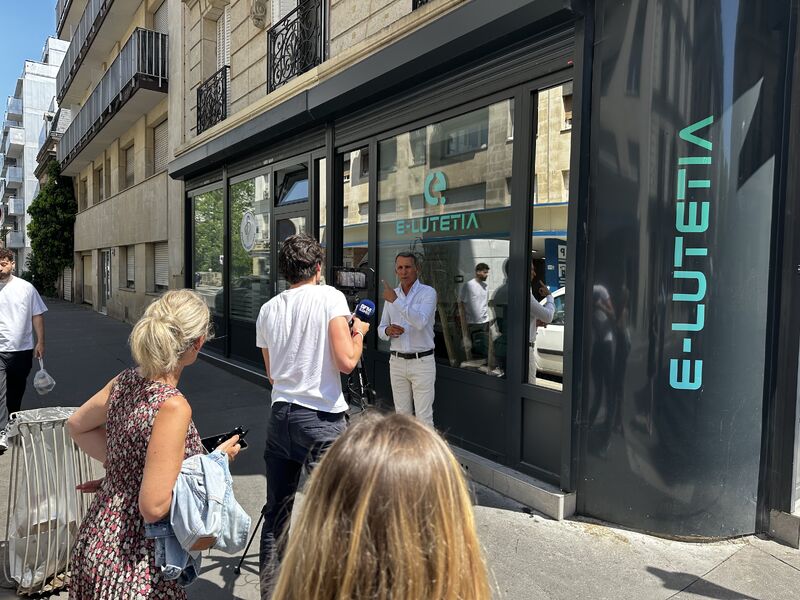
The real bottleneck in urban EV adoption is often not the vehicle.
It is energy access that is fast enough, reliable enough, and available exactly when work depends on it.
That is why the E-lutetia / E-Motum model is so interesting.
This is not just another charging site.
It is an attempt to make electric mobility actually operable for professional urban users - Uber (VTC) drivers, taxis, people transport, urban delivery - by coupling fleet and infrastructure in one integrated operating model.
That matters.
On highways, charging coverage is improving.
At home, some users can plug in every night.
But in dense cities, for high-mileage professionals, the problem is completely different:
no private charger, no tolerance for waiting, and no room for “maybe I’ll find a fast charger later”.
In other words:
urban charging is not a convenience problem.
It is an uptime problem.
The strongest thing I saw in Paris was not only the installed power.
It was the logic of the system:
the hub feeds the fleet, and the fleet guarantees demand for the hub.
That is how infrastructure starts to look like a business model rather than a subsidy story.
My view:
Whoever solves professional urban charging in a scalable way will not just support electrification.
They will shape it.
What do you think is the real bottleneck in dense-city electrification today:
the vehicle, the charging infrastructure, or the operating model around both?
And which city should be the next obvious test case after Paris?