Yesterday and today I attended the Reuters Events Automotive Europe conference in Frankfurt.
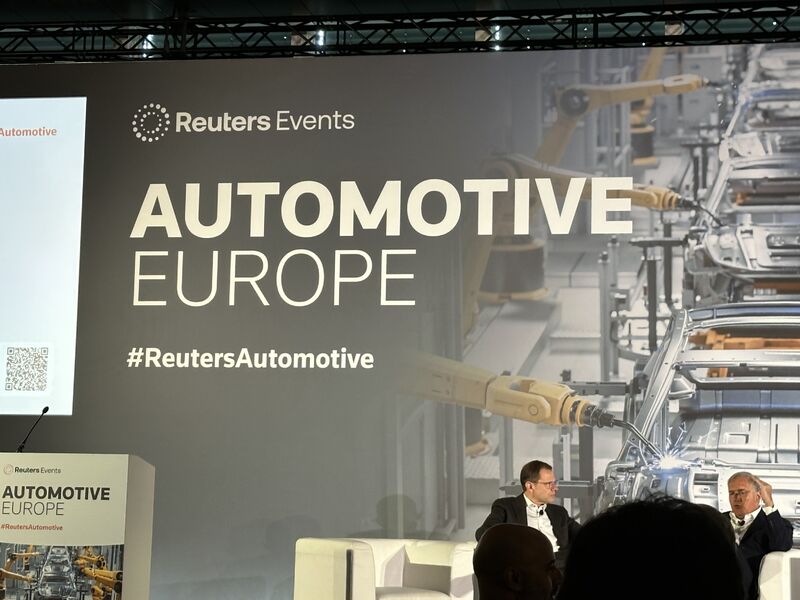
One of the most interesting moments was the interview with Alfredo Altavilla, Special Advisor for the European Market at BYD.
His message was uncomfortable in exactly the right way:
The Chinese wave will come.
Import duties will not stop it. They may change the route, accelerate localization, and push Chinese manufacturers to build or buy capacity in Europe. But they will not remove the competitive reality.
This is not only about “unfair state-sponsored competition”.
Of course China has industrial policy, subsidies and structural advantages. But that explanation is too comfortable if it becomes the whole story.
Chinese companies also work extremely hard. They are focused, fast, and willing to accept lower margins for longer if that helps them gain scale.
Europe needs to take that seriously.
Some Chinese vehicles will be built in Europe. Some capacity may come from brownfield sites. If batteries are localized as well, part of the cost advantage will follow.
This may hurt European OEMs more than today’s restructuring plans assume. And for German OEMs, the loss of market share in China means the old playbook has to be ripped up anyway.
It reminded me of Nokia.
In 2002, when I was at Ford Motor Company, our chairman asked for someone from Nokia to teach us how to become faster in adopting technology.
Five years later, the iPhone was launched.
At the conference, another former Nokia person made the point that matters: they saw the challenge.
Incumbents are rarely blind. Many people inside them see what is coming.
The problem is whether the organization can move fast enough while it is still successful.
Europe still has real strengths: engineering, distribution, fleet relationships, service networks, leasing knowledge and a better understanding of European customers.
But these advantages only matter if companies become hungry to win again.
That is why dismissing BYD or the broader Chinese challenge is dangerous.
The answer is not panic.
But it is also not denial, tariffs and strikes.
The real question is not whether every existing job can be protected exactly as it is.
It cannot.
The real question is whether Europe can protect the industrial foundation that creates the next generation of jobs.
Less explanation why China is unfair.
More focus on why Europe has become too slow and too expensive.
The Chinese wave is coming.
The question is whether Europe can still decide what it wants to become before the market decides for it.