Last week I drove in an autonomous car in Munich!
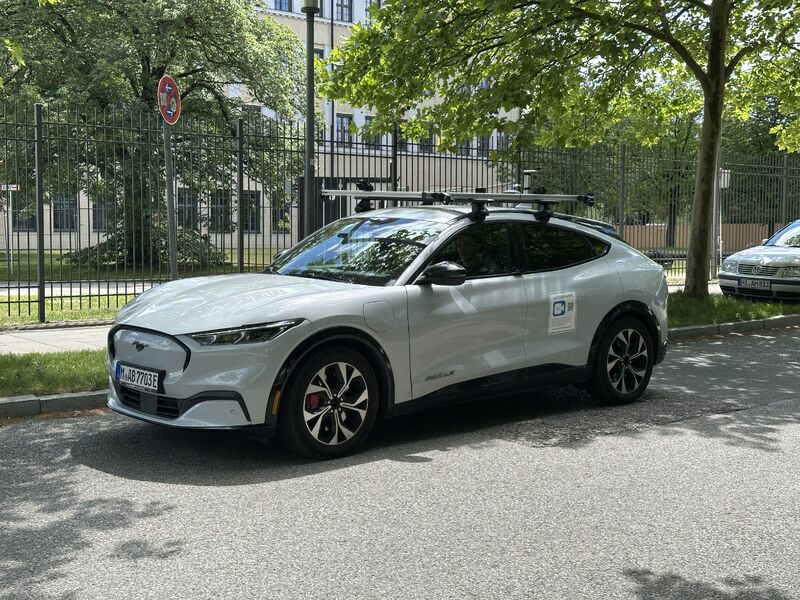
And my main impression was not that this technology is far away.
My impression was the opposite.
This could become real faster than many people in Europe still assume at scale, not as an experiment - maybe already next year?
What struck me most was not just the driving itself, but the approach behind it. It felt much less like the old autonomous-driving logic of enormous sensor stacks, heavy preparation and highly constrained environments.
The interesting direction now is different: less hardware, less dependence on pre-built cartography, faster rollout potential, and a system that can reason more flexibly about real-world situations.
That matters.
Because for years, many people in Europe learned to think of autonomous driving as something extremely expensive, extremely slow and limited to a few heavily mapped areas. That may still be true for some approaches.
But it may not be true for all approaches anymore.
If agentic AI changes what the vehicle needs to understand and how quickly it can adapt, then the whole discussion changes as well.
There are still issues. Some are technical. Many are practical.
Where does the vehicle stop in dense city traffic? How do pickup and drop-off work? How do passengers behave? How do cities handle autonomous cars alongside buses, bicycles, taxis, delivery vehicles and pedestrians?
Those are not minor questions.
But they are different from saying the technology is not coming.
After the ride, I am more convinced that the future may arrive unevenly, then suddenly.
Not everywhere.
Not for every use case.
But fast enough to punish companies and governments that still believe they have plenty of time.