If the electric transition is real, when does Europe actually burn less fuel?
Later than almost anyone expects. And the reason is the same slow-moving stock I wrote about earlier this week.
Fuel is not burned by the cars we sell. It is burned by the cars on the road - and that fleet turns over slowly. So even with new sales going strongly electric, the roughly 240 million combustion cars already out there keep driving, and keep filling up, for a decade or more.
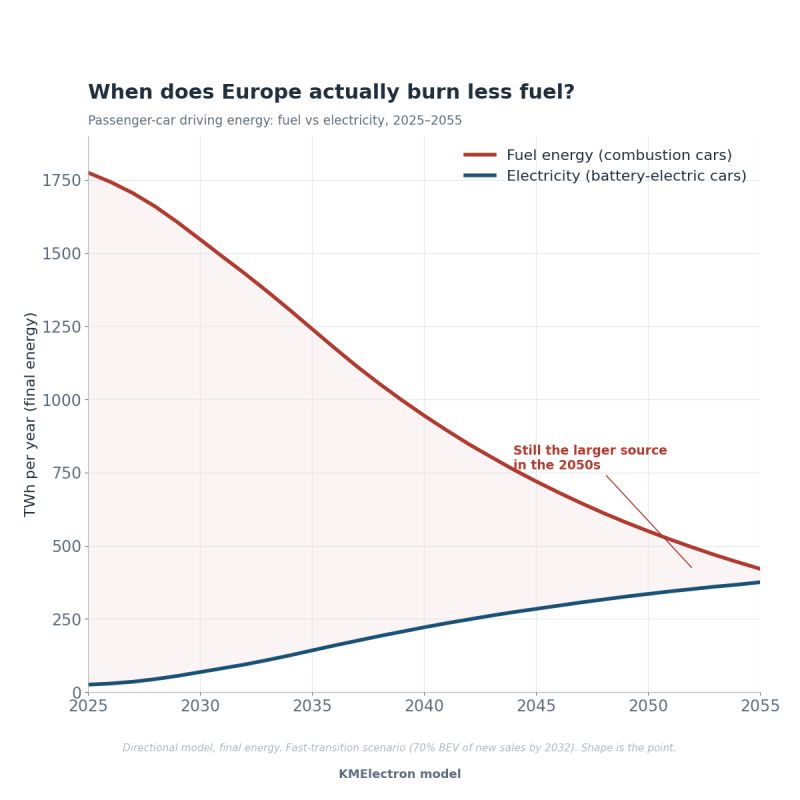
Put it into a model and the result is striking. Even on a fast transition, European passenger cars are still burning more energy as fuel than as electricity well into the 2040s. Twenty years after electric "wins" the showroom, petrol and diesel are still the larger source of driving energy.
The red line below - fuel - drifts down slowly, held up by the existing fleet. The blue line - electricity - climbs steadily but does not overtake it for decades.
There are three consequences we are not ready for.
Fuel-tax revenue will fall on a faster clock than fuel volume, because governments will raise per-litre duties as the base shrinks. The fiscal problem arrives before the physical one.
The last combustion cars will concentrate exactly where electrification reaches last - rural drivers, people without home charging, the used market. Often higher-mileage users. The tail is stubborn.
And the refining and fuel-retail network faces a slow, awkward decline rather than a cliff - still needed by millions, but by fewer every year.
None of this argues against the transition. It argues for being honest about its shape. It is a long drain, not a switch.