The people who will feel cheap electric mobility first are not the early adopters with a driveway and a solar roof.
They are the professionals. The high-mileage drivers. The fleets.
The logic is simple, and it is the part the consumer debate keeps missing. The saving from driving electric is the same per kilometre for everyone - but the more kilometres you drive, the more it compounds.
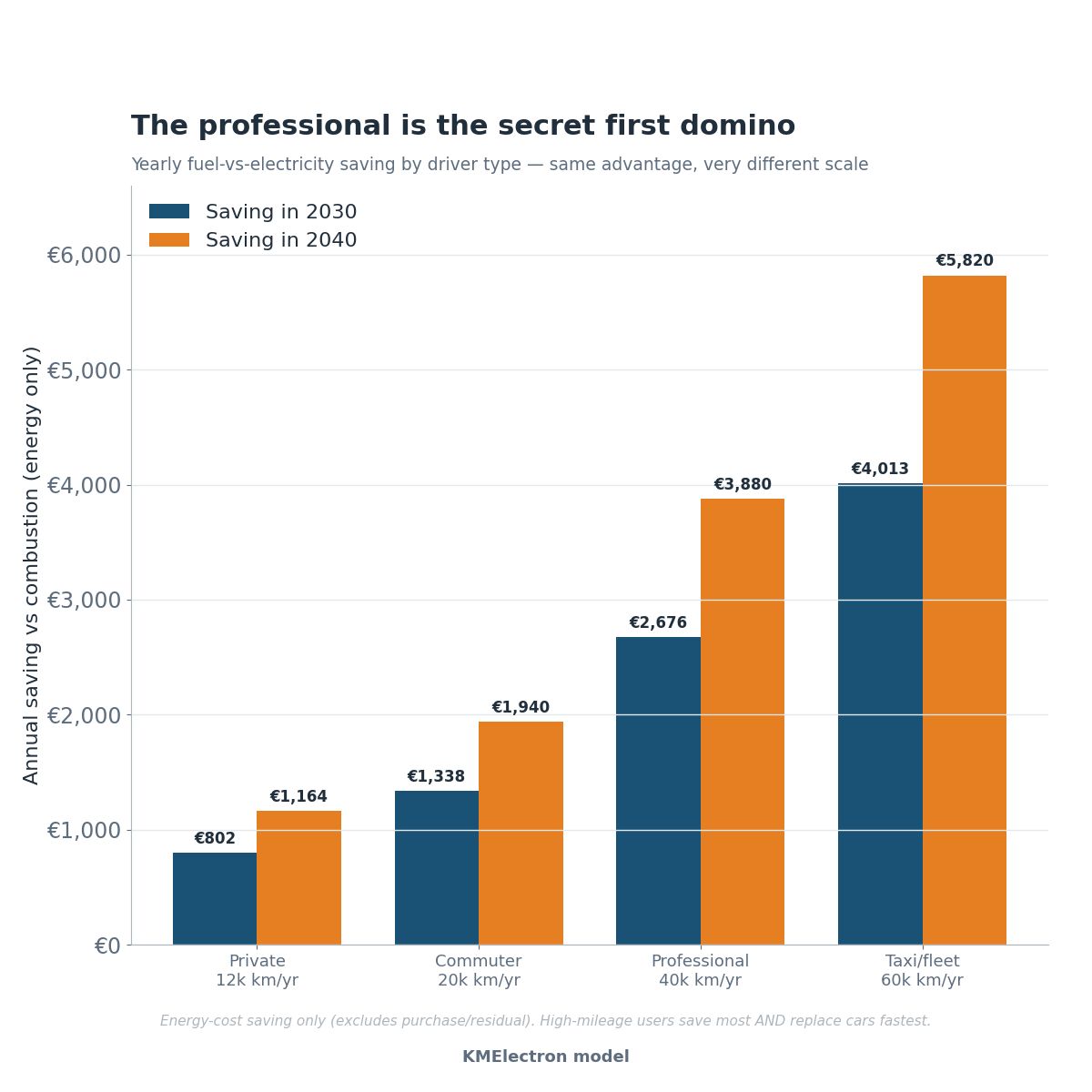
An average private driver at 12,000 km a year saves perhaps 800 euros a year at 2030 prices. A high-mileage professional at 40,000 km saves around 2,700. A taxi or heavy-fleet driver at 60,000 km saves closer to 4,000 - and by 2040, nearly 6,000 a year. In the chart below: same advantage, wildly different bars, purely because of distance.
Now add the second effect. Professionals replace their cars fastest - roughly every three years, against nine or more for a private owner. So the segment with the biggest saving is also the one that turns over quickest. Both forces point the same way.
The consequence is a specific order of adoption that almost no policy debate accounts for.
Fleets and professionals electrify first - on cold arithmetic, not sentiment. Because they cycle out every three years, they become the source of the used electric cars everyone else later buys. And the pace at which they hand those cars back is what sets residual values - which set the monthly payment for the mainstream buyer who comes next.
So the cheap-mobility revolution does not arrive everywhere at once. It arrives in a sequence: fleets, then professionals, then the used market, then the mainstream.
We argue endlessly about the last step. The economics are decided at the first.