Which small electric car will actually make it in Europe?
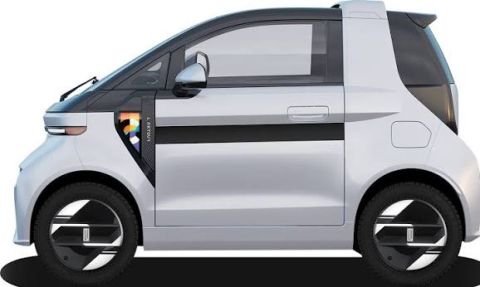
My bet is the one in the middle. But its biggest opponent isn't a competitor.
I recently heard more about LINKTOUR Automotive, a new Chinese entrant in France's "voiture sans permis" market. Its Alumi has an aluminium body, won the Red Dot, iF and German Design awards this year - a first for this class of vehicle - and starts at around €10,700.
It enters a market that already has three very different answers to the same question.
The Citroën Ami: cheap, around €8,000, and a real hit with young drivers. But it is a basic box. No airbag, and its class never has to pass a crash test.
The established players like Aixam Mega: in diesel they offer almost everything a small car has, including an airbag. In electric, there is still no product as convincing.
Microlino: the design answer. Beautiful, emotional, and priced close to a real small car.
And now somebody in the middle, like Linktour: design and a complete car, at a price much nearer the Ami than the Microlino. XEV tried something similar with the Yoyo and ran into serious financial trouble in 2024. Linktour may do better. It has a large industrial group behind it, and a distributor that wants 50 points of sale in France by the end of this year.
Cheap without safety will struggle once parents start comparing. Design at €20,000 stays a niche. Diesel is running out of road in cities. That leaves the middle.
But whoever wins still has to beat the real opponent: the regulator.
Paris cut the périphérique to 50 km/h in 2024. These cars, which drive at 45, are still banned from it. France scrapped the purchase bonus for them in 2025. What replaced it is worth a few hundred euros. Across Europe, L6 and L7 vehicles are treated as a nuisance to be managed, not a solution to be used.
They are the lightest and most efficient cars on the road. A 7 kWh battery, a household socket, no charging network needed. Yet nobody is making room for them.
Which rule would you change first to give them a fair chance?