The countries without a car industry have the better traffic policies.
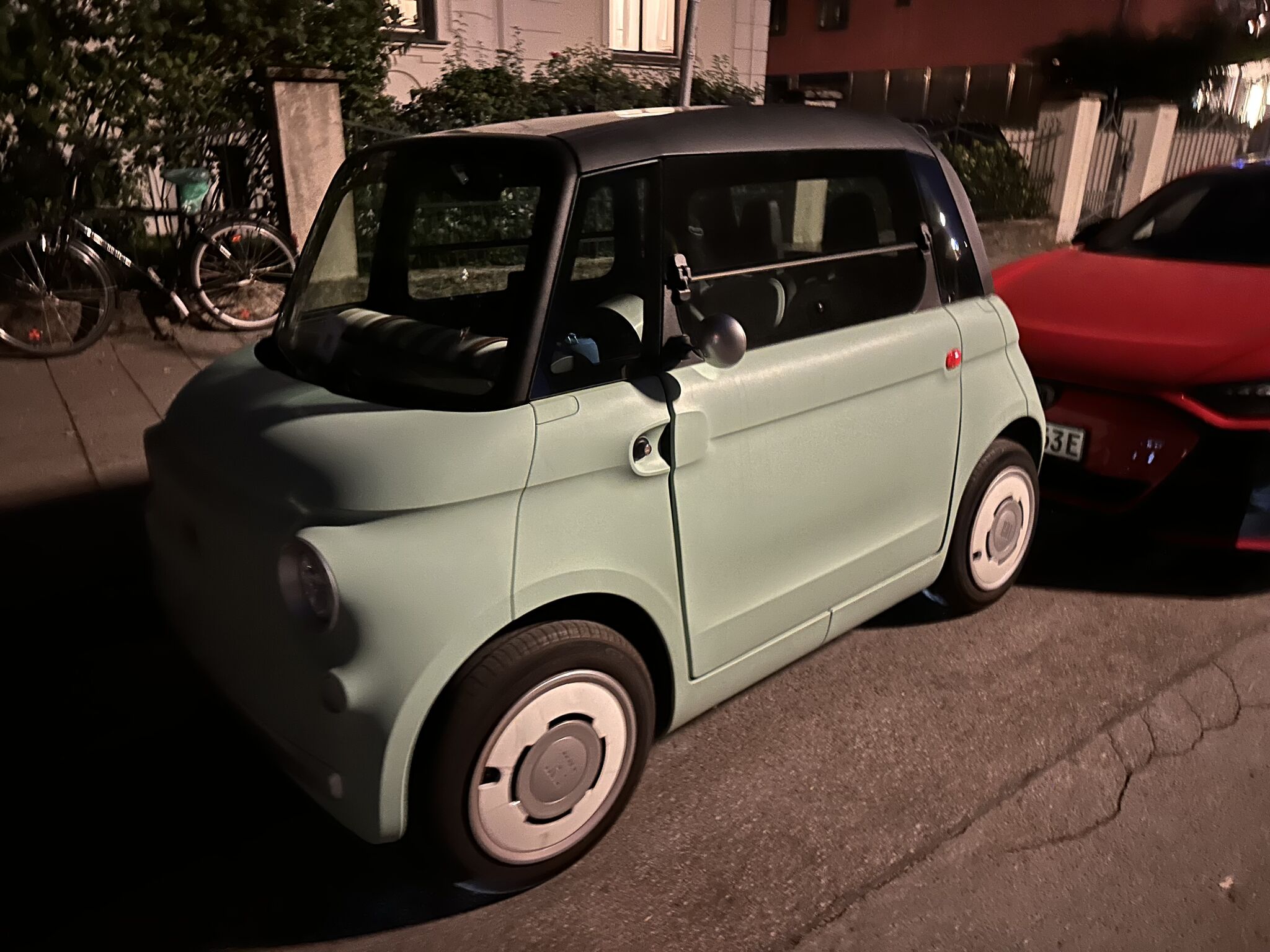
That sounds unfair. But look at where Europe's most interesting mobility decisions have been made.
Norway has no car industry to speak of. Almost every new car sold there is now electric.
The Netherlands has no big carmaker either. Somebody told me last week that Amsterdam is full of small electric microcars. It was, for a reason. The city made 30 km/h the norm on most of its streets and gave these cars something regular cars rarely get there: a parking permit valid across the whole city. Their number nearly quadrupled in five years, to about 4,700.
Then the special permits ran out, and new sales in the city collapsed almost overnight. That is the second lesson: one parking rule moved this market more than any purchase bonus ever did.
Now look at the countries that build cars. Germany has argued about a motorway speed limit for fifty years. France has a whole industry of small cars that fourteen-year-olds may drive, and still bans them from the périphérique in Paris.
That is not because politicians in Berlin or Paris are worse. It is because policy gets written for the industry you have, not for the traffic you have. A country with carmakers asks: what does this mean for our plants? A country without them asks: what does this mean for our streets?
Both are legitimate questions. Only one of them is about the people who actually have to get around.
I have spent most of my career inside carmakers. I know how loud the first question is in a capital city. The countries that don't have to hear it are running the experiments the rest of us will copy later.
Which country's mobility policy would you import tomorrow?